

Introduction
The Supreme Court case Brown v. Board of Education is one of the most important events in American legal and social history. This decision, made in 1954, said that racial segregation in public schools was against the law. It directly challenged decades of legal discrimination. The verdict delivered a strong statement that separation based on race could not go hand in hand with equality under the law at a period when segregation affected almost every part of public life.
This decision did more than just impact how schools worked; it also changed how people talked about civil rights, justice, and the federal government’s job of defending people’s rights. To fully grasp its significance, one must examine the historical context, legal rationale, societal effects, and enduring legacy of this pivotal ruling.
Before the Case, Racial Segregation in the United States

Jim Crow laws made it permissible for many portions of the United States to be racially segregated before Brown v. Board of Education. These regulations required Black and white Americans to use different schools, transportation, and public services. The Supreme Court’s 1896 ruling in Plessy v. Ferguson set the legal basis for segregation by introducing the idea of “separate but equal.”
The wording made things sound fair, but the truth was far different. Schools for Black kids typically didn’t have enough money, had old literature, too many kids in each class, and buildings that weren’t good enough. White schools, on the other hand, usually got more money and resources. Even though there were apparent imbalances, segregation was still legally protected for decades, which made social and economic gaps even bigger.
By the early 1900s, African American groups and civil rights groups started to fight against these unfair practices because they thought that true equality couldn’t happen under a society that separated people by race.
What the NAACP Does and How It Works
The National Association for the Advancement of Colored People (NAACP) methodically organized the legal fight that led to brown vs. board of education. The NAACP didn’t combat segregation in general; instead, they focused on public education, where the problems were most obvious and emotionally powerful.
The NAACP’s main lawyer, Thurgood Marshall, was a key figure in developing the legal strategy. He and his team tried to show that segregation was bad for people, even if the physical facilities looked the same. The goal of this method was to show that separation always led to inequality, which would undercut the “separate but equal” ideology.
There were many lawsuits in other states, and each one showed how bad segregated schools were for Black kids and their families.
The Cases That Made Up Brown v. Board of Education
Brown v. Board of Education was actually a combination of five cases from Kansas, South Carolina, Virginia, Delaware, and Washington, D.C. In each case, Black families fought against schools that were separate from each other in their neighborhoods.
The most notable case occurred from Topeka, Kansas, where Oliver Brown sued the local Board of Education because his daughter Linda Brown was not allowed to go to a nearby white school. Instead, she had to go a greater distance to go to a Black school that was separate from the rest. There were similar examples from other states, showing that prejudice was common.
The Supreme Court was able to deal with the bigger constitutional issue of segregation in public education across the country by integrating these cases.
What the Supreme Court Heard
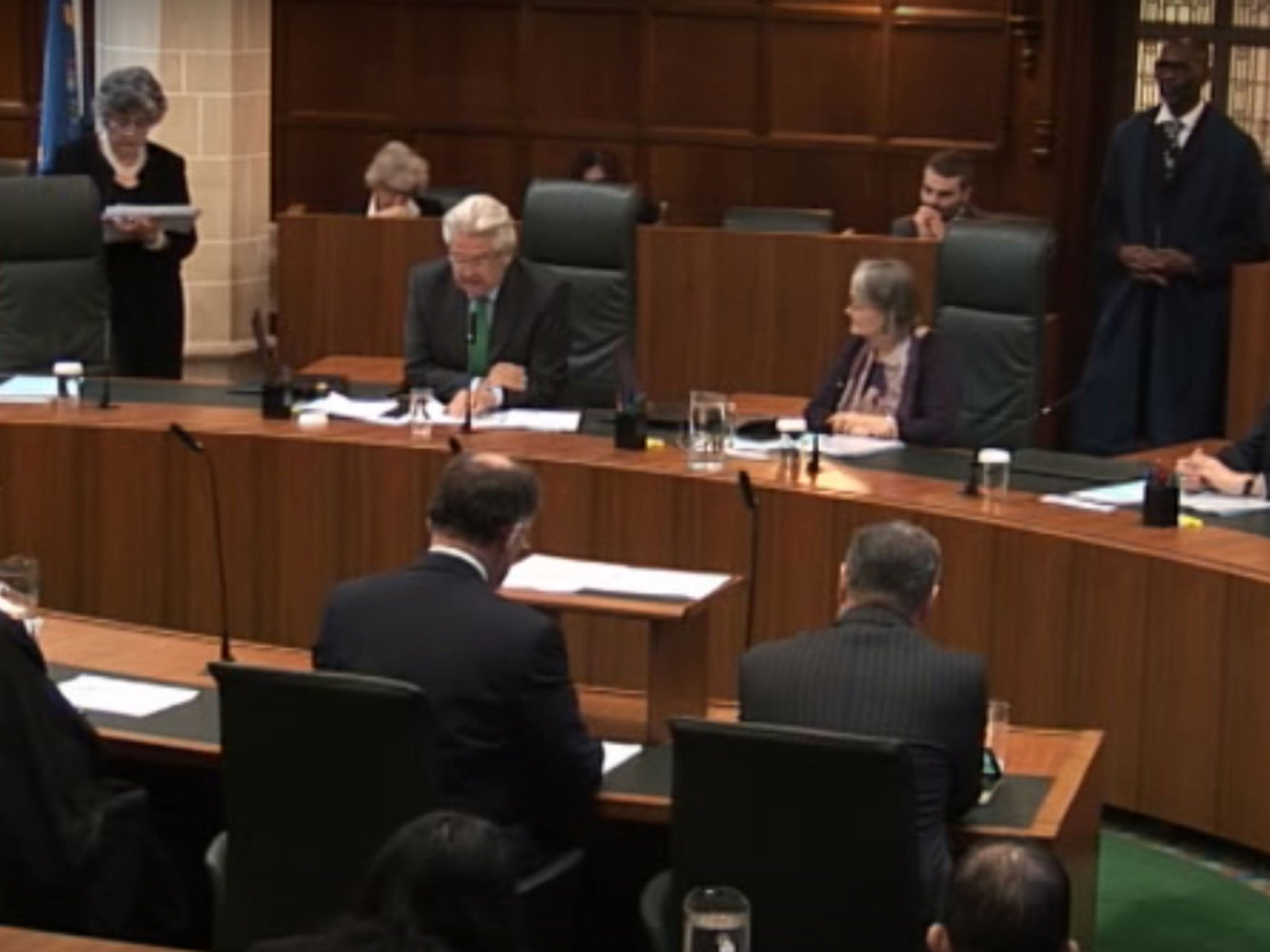
In the case of Brown v. Board of Education, the plaintiffs said that separate schools broke the Fourteenth Amendment’s Equal Protection Clause. They showed that segregation hurt Black children’s mental and emotional health, making it harder for them to learn and build confidence.
Kenneth and Mamie Clark’s psychological research were some of the most important pieces of evidence. Their findings showed that Black youngsters who lived in segregated areas often felt inferior because they thought that being white meant success and being Black meant failure.
The defense said that segregation was a long-standing tradition backed by history and that the state should still be in charge of school policy. They said that the Constitution did not clearly say that schools could not be segregated.
The Supreme Court made a historic decision
In 1954, the Supreme Court unanimously ruled in Brown v. Board of Education that it was against the law to separate students by race in public schools. Chief Justice Earl Warren wrote the Court’s opinion, which stressed how important education is for both personal growth and being able to participate in democracy.
The Court is notable for saying that “separate educational facilities are inherently unequal.” This declaration said that Plessy v. Ferguson was wrong and that segregation itself caused inequality, no matter what the physical conditions or resources were.
The ruling was a big deal for constitutional law and showed that people were more serious about civil rights and equal protection under the law.
Brown II and the Problem of Enforcement
Brown v. Board of Education made school segregation illegal, but it was hard to put into practice. The Supreme Court made another decision in 1955, known as Brown II, that told states to “desegregate schools with all deliberate speed.”
This term may be understood in several ways, which provided states that didn’t want to comply more time to do so. In several Southern states, officials were openly against desegregation and used legal loopholes and administrative tricks to keep the systems separate.
Federal courts, civil rights groups, and community organizers kept pushing for enforcement, even though some people didn’t want it. This slowly led to more integration over the next few decades.
People’s Reactions and Resistance

People all throughout the country had different reactions to the brown vs. board of education decision. Many people who fight for civil rights saw the ruling as a long-overdue step toward justice. But some people reacted with anger and disobedience.
In other places, public schools were shuttered instead of being combined. Political leaders pushed for “massive resistance” strategies that told people to fight against federal directives to desegregate. These actions showed how deeply segregation was ingrained in American society and how hard it could be to make real changes.
At the same time, courageous children and families who attended mixed schools were bullied, threatened, and attacked, showing how hard it is to make progress.
Effect on the Civil Rights Movement
The impact of Brown v. Board of Education went well beyond schools. The ruling gave the larger Civil Rights Movement new life by showing that the legal system could be used to fight segregation.
It laid the groundwork for future attempts to get rid of discrimination in housing, transportation, jobs, and voting rights. Activists used the verdict as a reason to plan rallies, boycotts, and marches to demand fair treatment.
The decision also led to important laws like the Voting Rights Act of 1965 and the Civil Rights Act of 1964, which made protections against discrimination even stronger.
Effects on American Education in the Long Run

The impact of Brown v. Board of Education still affects how schools are run today. Even if legal segregation is no longer in place, many schools are nonetheless split by race and income because of where people live and how much money they get.
Still, the verdict set an important legal precedent: discrimination in education is against the Constitution. This principle has been used in instances about equal rights for women, people with disabilities, and those from marginalized groups who want to go to school.
The decision also strengthened the view that education is a key factor in creating opportunities and social mobility.
Criticism and Problems That Keep Happening
Brown v. Board of Education has been criticized for not going far enough, even though it is very important. Some academics contend that the decision lacked definitive enforcement tools, enabling segregation to endure in more insidious forms.
Some others say that integration alone didn’t fix bigger problems with the way things are set up, like unequal funding for schools and segregation of neighborhoods. These criticisms show how hard it is to really make education fair for everyone.
Even so, the case is still an important point of reference in talks about civil rights, social justice, and how to read the Constitution.
Why Brown v. Board of Education Is Still Important
Brown v. Board of Education is still very important more than 70 years after the judgment. It reminds us that the principles of the Constitution need to change to fight injustice and preserve people’s rights.
The case shows how going to court may fight against systems of inequality that are deeply rooted and lead to bigger changes in society. It also shows how important education is for democracy and fair opportunity.
The Supreme Court upheld a strong concept of justice that still guides civil rights activities today by saying that separation can never be equal.
Conclusion
Brown v. Board of Education is a landmark case in the fight for equality in the United States. It changed the Constitution, ended decades of legal segregation, and sparked a movement that changed American culture.
There are still problems to solve, but the ruling is a big step toward keeping the promise of equal protection under the law. It will always be remembered as a legal milestone and a moral statement about fairness, decency, and opportunity.
Read More:- Minecraft Education Edition: Transforming Learning Through Play