
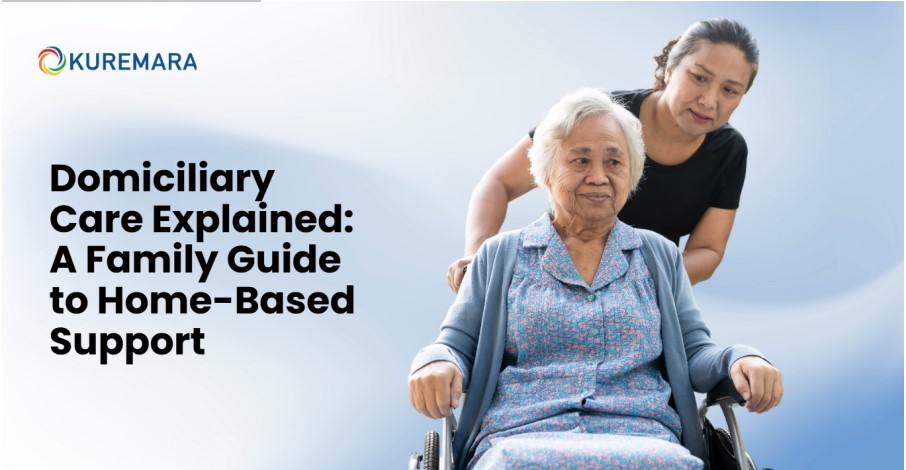

Choosing care for someone you love is rarely a simple decision. It usually arrives at a difficult moment after a fall, a diagnosis, a hospital discharge, or the slow realisation that a parent is no longer managing safely on their own. In these moments, families across the UK increasingly look for a way to keep their loved ones at home, surrounded by familiar things, rather than moving them into a residential setting. This is where home-based support becomes so valuable, and understanding how it works can make an overwhelming decision feel manageable.
At Kuremara, a CQC-registered provider based in North London and serving families across England, we speak with people every week who are navigating this for the first time. This guide is written to answer the questions we hear most often, clearly and honestly, so you can make an informed choice for your family.
What Home-Based Care Actually Means
At its heart, this type of support is about helping a person continue living in their own home while receiving the assistance they need with daily life. Rather than relocating to a care home, the individual stays put, and trained carers come to them whether that means a short visit once a day or round-the-clock live-in support. This is the essence of domiciliary care: bringing professional support to the person, rather than moving the person to the support.
The support is genuinely personal. One person might need help getting washed and dressed in the morning. Another might need medication prompts, help preparing meals, or simply companionship to ease loneliness. A third might have complex medical needs requiring nurse-led attention. The defining feature is that care is shaped around the individual, not the other way around, and it flexes as circumstances change over time.
Home is more than a location. It holds memories, routines, and a sense of identity that can be deeply grounding, particularly for older adults or those living with dementia. Keeping someone in that environment often supports their emotional wellbeing just as much as their physical health.
The Different Types of Support Available

Families are sometimes surprised by how varied home-based care can be. It is not a single service but a spectrum, and the right fit depends entirely on the person’s needs, their household, and how those needs are likely to evolve. Understanding domiciliary care services in detail helps you match the support to the situation rather than settling for a one-size-fits-all arrangement.
Here are the main forms of support you are likely to encounter, with an explanation of when each one tends to suit best:
- Hourly visiting care.Carers visit at scheduled times to help with specific tasks personal care, household chores, meal preparation, or companionship. This suits people who are largely independent but need a helping hand at certain points in the day, and it can be scaled up as needs increase.
- Live-in care.A dedicated carer lives in the home, providing continuous support and companionship. This is well suited to people who need frequent assistance or reassurance throughout the day and night, and it offers a genuine alternative to moving into a care home.
- Respite care.Temporary cover that gives family carers a well-earned break. Whether you need a few days or a few weeks, respite care ensures your loved one is looked after by professionals while you rest, travel, or simply recover your own energy.
- Overnight care.Support during the night, either through a carer who sleeps in and is on hand if needed, or one who stays awake to provide continuous waking care. This brings peace of mind for households worried about night-time falls, confusion, or medical needs.
- Complex care.Nurse-led support for individuals with long-term conditions or specialist medical requirements, delivered safely in the comfort of home rather than a clinical setting.
- Emergency cover.Rapid, reliable support when care is needed at short notice — after a sudden illness, a hospital discharge, or the unexpected absence of a usual carer.
- Companionship care.Friendly conversation, social outings, and emotional support for those who are isolated or lonely, focusing on connection and quality of life.
The value of working with experienced domiciliary care providers is that they can help you identify which combination of these services fits your situation, and adjust the plan as needs change a point worth exploring in more depth.
Why the Right Provider Makes All the Difference
Not all care is equal, and the organisation delivering it matters enormously. When you invite someone into your home to support a vulnerable relative, trust is everything. This is why regulation, training, and transparency should sit at the very top of your checklist.
In England, care providers of this kind must be registered with and inspected by the Care Quality Commission (CQC), the independent regulator of health and social care. CQC registration means a provider is held to national standards, subject to independent inspection, and accountable for the safety and quality of the care it delivers. Choosing a registered provider is one of the simplest ways to protect your loved one. At Kuremara, we are fully CQC-registered, and our carers are rigorously vetted, background-checked, and trained before they ever step into a client’s home.
Beyond regulation, look for a provider that takes a person-centred approach — one that builds care plans around the individual and is willing to adapt them. Ask how they match carers to clients, how they handle continuity so your relative isn’t meeting a new face every visit, and how they communicate with families. The best providers see care as a partnership with you, not a transaction.
Questions Worth Asking Before You Commit
Before signing anything, it helps to go in with a clear set of questions. The answers will tell you a great deal about how an organisation operates and whether it is the right fit for your family. Taking time over this stage is never wasted.
Consider asking the following, and pay attention not just to the answers but to how openly they are given:
- Are you registered with the CQC, and can I see your latest inspection report?A reputable provider will share this willingly and talk you through what it means.
- How do you create and review care plans?You want to hear that plans are tailored to the individual and revisited regularly as needs change, not fixed in stone.
- How are your carers recruited, trained, and vetted?Look for thorough background checks, structured training, and ongoing development rather than vague reassurances.
- Will my relative have consistent carers?Continuity matters hugely for trust and comfort, especially for people living with dementia or anxiety.
- What happens in an emergency or if a carer is unavailable?A well-run organisation will have reliable contingency arrangements so care never simply stops.
- How do you keep families informed?Regular, honest communication is a hallmark of good care and gives you peace of mind between visits.
- What are the costs, and what exactly is included?Clear, transparent pricing with no hidden extras is a sign of an organisation you can trust.
Asking these questions early saves stress later and helps you feel confident that you are making the right choice.
Understanding the Cost and Funding Options
Cost is understandably one of the first concerns for most families, and it is worth being realistic about it from the outset. The price of home-based support varies according to the type and amount of care required, from a single short daily visit through to full live-in support.
The good news is that funding help may be available. Depending on individual circumstances, support can come through local authority funding following a needs assessment, NHS Continuing Healthcare for those with significant health needs, or various benefits and allowances. Many families also fund care privately, either in full or to top up other support. A good provider will talk you through these options honestly and help you understand what you may be entitled to, rather than leaving you to work it out alone.
It is always worth having an open conversation about budget early on. This allows the care plan to be built realistically around what is affordable and sustainable for your family over the longer term.
Taking the First Step With Confidence
Arranging care can feel daunting, but it does not have to be faced alone. The most important thing is to start the conversation to reach out, ask questions, and understand the options open to you. From there, a thoughtful provider will guide you through each stage, listening to your concerns and helping you shape support that genuinely fits.
Keeping a loved one safe, comfortable, and independent in their own home is one of the most caring decisions a family can make. With the right support in place, home can remain exactly what it has always been: a place of security, familiarity, and dignity.
If you would like a no-obligation chat about your family’s needs, Kuremara’s friendly team is here to listen and help you find the way forward. You can reach us on 0330 111 5400 or explore our services and funding guidance at kuremara.co.uk.