
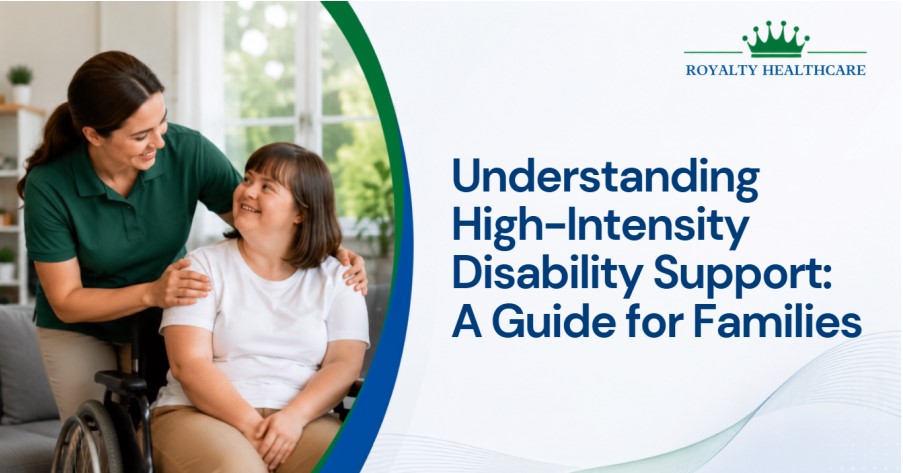

When a loved one has high or complex care needs, finding the right support can feel like one of the most daunting responsibilities a family faces. The stakes are simply higher. This is not ordinary daily assistance but specialised, often clinical care where safety, skill, and consistency genuinely matter to a person’s health and quality of life. Families in this situation are frequently navigating hospital discharges, changing medical needs, and a great deal of worry, all while trying to work out who they can truly trust with someone they love.
This guide is written to bring clarity and reassurance to that search. Drawing on years of hands-on experience delivering specialised support to participants across South-East Queensland, we explain what high-intensity care actually involves, what to look for in a provider, why clinical expertise and consistency matter so much, and the practical questions worth asking before you commit. The aim is to help you make a confident, well-informed decision for the person in your care.
What High-Intensity Care Actually Involves
High-intensity or complex care refers to support for participants whose needs go beyond standard daily assistance and require specialised clinical skills. This is care delivered by trained professionals, often including registered nurses and support workers with specific high-intensity qualifications, working in close consultation with a participant’s treating doctors and specialists. The goal is to deliver this level of care safely in the comfort of the participant’s own home rather than in a hospital or institutional setting.
In practice, complex care covers a wide range of clinical supports. It can include complex bowel care, enteral feeding through a tube, catheter care, tracheostomy support, and seizure management, among others. Each of these requires proper training, careful protocols, and precise adherence to a participant’s individual clinical plan. This is not an area where good intentions alone are enough; the work demands genuine competence and rigorous attention to safety at every step.
Understanding this scope helps families grasp why choosing the right provider is so important. Quality NDIS Complex Care Brisbane support brings together clinical expertise, trained staff, and carefully designed plans so that even the most demanding needs are met safely and with dignity at home. When this is done well, participants who might otherwise face lengthy hospital stays can live in familiar surroundings, supported by people who genuinely know how to care for them, which is exactly the outcome most families are hoping for.
What to Look for in a Complex Care Provider

Choosing a provider for high-intensity care is a decision that deserves careful thought, and the differences between providers are not always obvious at first glance. Assessing each option against practical, evidence-based criteria helps you see past reassuring words to what genuinely matters.
- Clinical expertise and qualified staff.Complex care requires registered nurses and support workers specifically trained in high-intensity supports. Ask about the qualifications of the team, the training they receive, and their genuine experience delivering the specific type of care your loved one needs.
- Registration and compliance.A provider registered with the NDIS Quality and Safeguards Commission has been independently audited against the NDIS Practice Standards. This verification offers reassurance that the organisation meets nationally recognised benchmarks for safety and quality, which matters enormously when care is clinical in nature.
- Coordination with treating clinicians.Good complex care is never delivered in isolation. The provider should build each care plan in genuine consultation with the participant’s doctors and specialists, ensuring their support aligns precisely with medical advice and adapts as needs change.
- Consistency of care.With clinical needs, having consistent, familiar staff who truly know the participant is not a luxury but a safety matter. Ask how the provider ensures continuity so your loved one is not constantly supported by unfamiliar workers.
- Person-centred approach.Even the most clinical care must honour the participant’s dignity, preferences, and quality of life. A provider that treats the person as a whole individual, rather than a set of medical tasks, delivers care that feels genuinely respectful and humane.
Working through these criteria systematically helps you identify a provider capable of delivering not just competent care, but care you can genuinely trust.
Why Clinical Expertise and Consistency Matter Most
Among everything families weigh up, two qualities deserve to sit at the very centre of the decision: genuine clinical expertise and consistency of care. These are worth highlighting because, in high-intensity support, they are not optional refinements. They are what keep a person safe. A reputable NDIS Complex Care Provider Brisbane families can rely on will demonstrate both in everything they do.
Clinical expertise matters first because complex care carries real risk when handled poorly. Procedures like enteral feeding, catheter care, or seizure management demand proper training and strict protocols; a mistake can have serious consequences for a person’s health. A provider with registered nurses and properly trained support workers, guided by plans developed alongside treating clinicians, dramatically reduces that risk. This is the difference between care that safely supports a person’s health and care that inadvertently endangers it, which is why expertise can never be compromised for convenience or cost.
Consistency matters just as much because familiarity is itself a form of safety in complex care. When the same trained workers support a participant regularly, they come to understand that person’s baseline, notice subtle changes early, and respond with confidence born of genuine knowledge. Constantly rotating unfamiliar staff, by contrast, increases the chance that something important is missed and undermines the trust and comfort a participant needs. A provider that prioritises continuity gives families the reassurance that their loved one is always in capable, familiar hands.
When you place clinical expertise and consistency at the heart of your decision, the right provider becomes far easier to identify. You are no longer swayed by reassuring language alone, but focused on the qualities that genuinely determine whether care is safe. That shift, from hopeful trust to informed confidence, is the most valuable perspective a family can bring to this decision.
Delivering Complex Care Safely at Home
One of the greatest benefits of quality complex care is that it allows participants to receive genuinely clinical support in their own home rather than in a hospital or facility. Achieving this safely, however, depends on more than willingness; it requires the right people, the right planning, and the right safeguards working together seamlessly.
It begins with a carefully designed care plan built in consultation with the participant’s treating clinicians, setting out precisely how each aspect of their care should be delivered. Trained staff then follow that plan rigorously, with proper protocols for every procedure and clear processes for responding if something changes. Well-delivered Complex Care Services Brisbane combine this clinical rigour with genuine warmth, so a participant experiences not just safe procedures but compassionate, dignified support from people who care about their comfort. Where a participant is coming home from hospital, a good provider coordinates closely with discharge planners and hospital teams to ensure supports are in place before they arrive, making the transition as smooth and safe as possible.
Questions Worth Asking Before You Commit
Before choosing a provider, a thoughtful conversation can offer enormous reassurance. Consider asking about the qualifications and experience of the staff who would actually deliver the care, how the provider coordinates with your loved one’s doctors and specialists, and how they ensure consistency so familiar workers support the participant. Ask too about how care plans are developed and reviewed, how staff are trained for the specific procedures involved, and how the provider responds if a participant’s needs change or an emergency arises.
The answers reveal a great deal about whether a provider genuinely has the expertise and systems that safe complex care demands. A capable, confident provider will welcome these questions and answer them openly and clearly. Trust your instincts during these conversations, because the care, thoroughness, and honesty a provider shows at the outset is usually a reliable preview of the support they will deliver.
Making Your Decision with Confidence
Choosing complex care support does not have to feel overwhelming. By understanding what high-intensity care involves, evaluating providers against practical criteria, placing clinical expertise and consistency at the centre of your thinking, and asking the right questions, you put yourself in a strong position to choose well. The goal is not simply to find care, but to find safe, skilled, compassionate support that lets your loved one live with dignity and comfort at home.
Royalty Healthcare is a registered NDIS provider delivering specialised, compassionate complex care to participants across Brisbane, Ipswich, Logan, the Gold Coast, and the Sunshine Coast. With a team that includes registered nurses, behaviour support practitioners, and support workers trained in high-intensity care, and every plan built in consultation with your treating clinicians, we are here to support your loved one safely and with dignity at home. If you would like to talk through your situation, our team is only a phone call away on 1800 467 692, or you can reach us at info@royaltyhealthcare.com.au.
Whatever path you choose, take the time to ask questions, trust your judgement, and put the participant’s safety and dignity at the centre of every decision. That focus, more than anything else, is what leads to complex care support you can genuinely trust.