
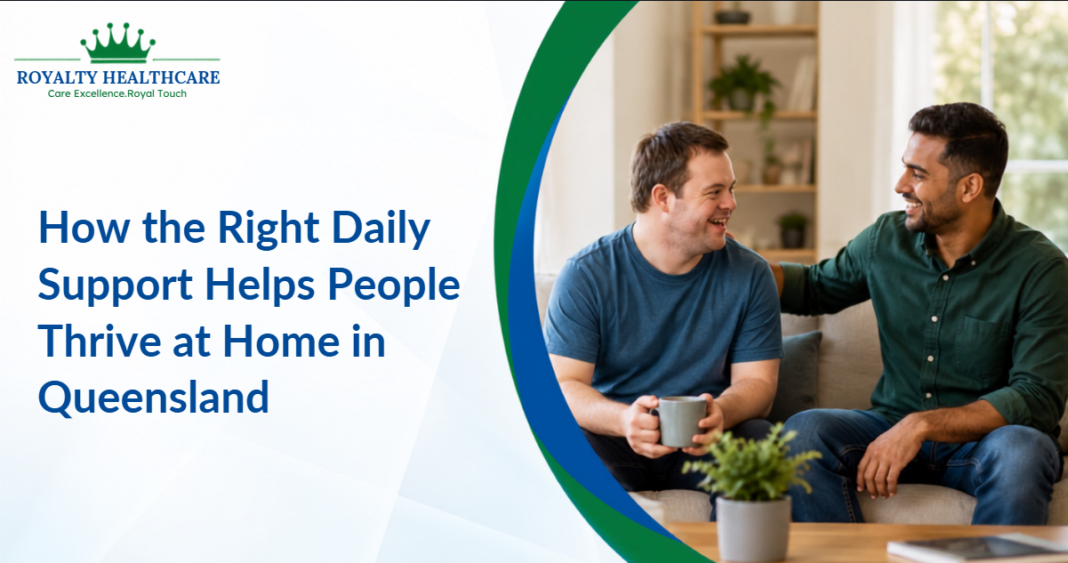

Living independently is something many of us take for granted, but for people with disability, achieving it often depends on having the right support in place. The right daily assistance can be the difference between merely getting by and genuinely flourishing between a house that feels like a holding place and a home where a person grows, connects, and lives on their own terms. This guide explores how quality daily support works, what makes it effective, and how to find an arrangement that helps someone truly thrive.
The Difference Good Daily Support Makes
Daily support for people with disabilities is about far more than completing tasks. At its best, it’s a carefully judged balance providing help where it’s genuinely needed while stepping back to let a person do what they can for themselves. That balance is where independence grows. Do too little, and safety and wellbeing suffer; do too much, and you rob someone of the chance to develop their own capabilities and confidence.
The best support is invisible in the right ways. It anticipates needs without taking over, encourages without pressuring, and adapts as a person’s skills and circumstances change. A participant might start out needing help with cooking, medication, and getting out into the community, and over months of steady, encouraging support, gradually take on more of those tasks themselves. That progression from dependence toward autonomy is the whole point.
Good support also brings stability. Consistent routines delivered by familiar people create a sense of security that underpins everything else. When someone knows who’s arriving, what the day holds, and that they’re in capable, caring hands, anxiety falls away, and the space opens up for growth, connection, and genuine enjoyment of life.
What Quality Support at Home Involves
Effective daily support spans a wide range of everyday activities, all tailored to the individual. It might include personal care such as showering, dressing, and grooming, delivered with respect and dignity. It often covers household tasks, cooking nutritious meals, cleaning, laundry, and keeping a home running smoothly. Medication support, health monitoring, and coordination with clinicians ensure a person’s wellbeing is properly looked after.
Beyond the practical, quality support helps people build life skills that expand their independence over time. This could mean learning to budget, use public transport, plan meals, or manage appointments. Community participation is another vital dimension that support workers help participants get out, stay socially connected, and take part in activities that give life meaning and joy. For those with higher needs, skilled support can extend to complex and high-intensity care delivered safely at home.
Quality SIL support Brisbane participants rely on brings all these elements together into a cohesive, person-centred arrangement. Rather than a fragmented service, the person experiences seamless support that flexes around their goals and routines. The strength lies in that integration: one team that knows the person well, delivering everything from daily living help to community engagement in a way that feels joined-up and genuinely caring.
The Qualities That Set Great Support Apart
Not all support is created equal, and knowing what distinguishes excellent care helps you choose wisely. The organisations that make the greatest difference share a set of qualities that go well beyond simply showing up. Look for these when evaluating your options:
- Consistency of staff.Familiar support workers who know a person’s needs, preferences, and quirks deliver far better outcomes than a rotating cast of strangers. Ask how the organisation manages rostering and retains its team, because continuity is the foundation of trust.
- A person-centred approach.Great support is built around the individual, their goals, their routines, their way of doing things. The person should have real say in how support is delivered, not simply receive a predetermined package.
- Skilled, well-trained teams.Look for staff trained in the areas that matter for the person, whether that’s trauma-informed care, complex care, medication management, or manual handling. Skilled teams provide safer, higher-quality support and handle change with confidence.
- Genuine warmth and respect.Beyond credentials, the best support workers bring patience, empathy, and a real commitment to the person’s dignity. Care delivered with kindness transforms the everyday experience of receiving support.
- Clear communication.A quality provider keeps participants and families informed, shares progress honestly, and responds promptly to questions or concerns. Open communication builds the trust that long-term support depends on.
- Needs change, and support should change with them. A great organisation adjusts arrangements as goals are met or circumstances shift, rather than locking people into rigid, unchanging routines.
Why Registration and Local Knowledge Matter

When choosing daily support, two factors deserve particular attention: whether the organisation is properly registered, and whether it truly knows the local area. Both have a direct bearing on the quality and reliability of the support you’ll receive.
Registration with the NDIS Quality and Safeguards Commission means an organisation has been independently audited against the Practice Standards, carries proper insurance, and screens its workers thoroughly. It provides accountable channels for raising concerns and protects your funding, especially for participants whose plans are NDIA-managed. Choosing a registered provider of NDIS SIL Brisbane support gives you the reassurance that comes from genuine, independent oversight of quality and safety a foundational marker of trustworthiness no family should overlook.
Local knowledge adds another layer of value. A provider embedded in the community understands the neighbourhoods, transport, healthcare services, and recreational opportunities that help a participant feel settled and connected. Local teams respond faster when needs change and can help people build real relationships in their own community. Organisations like Royalty Healthcare, which delivers support across Brisbane and South-East Queensland, show how combining full registration with deep local roots produces care that’s both safe and genuinely connected to the life a person wants to lead.
How Support Transforms Everyday Life
The real measure of quality support is what changes for the person receiving it. When daily assistance is delivered well, the effects ripple through every part of life, often in ways that surprise even the participant and their family.
Many people gain a confidence and independence they’d never experienced before. Skills once thought out of reach preparing a favourite meal, catching a bus alone, managing a weekly budget become part of everyday life, each one expanding a person’s sense of what’s possible. Social connection deepens as participants engage with their community, form friendships, and take part in activities they love. And beneath it all, calmer, safer routines create the stability from which lasting growth becomes possible. For families, watching a loved one flourish brings profound relief and joy, and the reassurance of knowing they’re safe and genuinely cared for.
These outcomes are exactly what the scheme was designed to deliver: not just care, but empowerment. Support that helps a person move from hour-by-hour dependence toward a life built around their own choices is support doing its job in the fullest sense.
Getting Started with the Right Support
If quality daily support sounds like the right path for you or someone you care about, taking the first step is more straightforward than many people expect. Approaching it methodically, with the right guidance, removes much of the uncertainty. Here’s how to begin:
- Clarify needs and goals.Reflect on what daily support the person requires and what they hope to achieve, whether that’s greater independence, new skills, or stronger community connection. This clarity shapes everything that follows.
- Understand your plan and funding.How your plan is managed NDIA-managed, plan-managed, or self-managed affects your options. A knowledgeable provider will help you understand what your funding covers and how support fits within it.
- Talk openly with providers.Reach out and discuss your situation honestly. A trustworthy organisation listens carefully, answers questions, and is upfront about what it can genuinely offer rather than overpromising.
- Meet the team.Wherever possible, meet the people who would provide support. Warmth, professionalism, and a genuine rapport tell you a great deal about whether an organisation is the right fit.
- Review the service agreement.Make sure you understand what’s included, how concerns are handled, and what flexibility exists. A transparent provider welcomes your questions and explains everything in plain language.
- Remember you have choice and control.Funding follows the person, so you’re never locked in. If an arrangement isn’t working, you have every right to change, and a good provider respects that freedom.
Take the Next Step Toward a Fuller Life
Quality daily support has the power to reshape a person’s life, offering safety, dignity, and the everyday freedoms that turn a house into a genuine home. The key to getting it right lies in understanding what good support involves, knowing the qualities that set great providers apart, and choosing a partner who truly puts the person at the centre of every decision.
If you’re exploring your options and want to speak with an experienced, registered team, consider reaching out to a trusted provider of supported independent living Brisbane families recommend. A friendly, no-pressure conversation is often the best way to understand what’s possible and whether an organisation is the right fit for your goals. Get in touch with a provider like Royalty Healthcare to discuss your needs, your plan, and how the right support can help you or your loved one live a fuller, more independent life across Brisbane and South-East Queensland.